Insights · Delta Roofing
How Routine Commercial Roof Inspections Cut Energy Waste in Buildings
A roof does not have to leak to cost you money. Wet insulation stops insulating long before anything shows up on a ceiling — and you pay for it every month in heating and cooling.
Article
A roof does not have to leak to cost you money. Long before water reaches a ceiling tile, a flat roof can be quietly adding to your heating and cooling bill — and the thing doing it is usually wet insulation.
Insulation works because it is dry. Once moisture gets into the roof assembly, that layer stops doing its job, and the plant runs harder to hold the same indoor temperature. Nothing looks wrong from inside the building. The cost simply moves from the roofing budget to the utility bill.
Where the energy actually goes
Four places account for most of it, and an inspection is looking at all four:
- Wet insulation — the big one, and invisible from the surface
- Failing flashings at walls, curbs and roof edges
- Worn seals around penetrations — HVAC kerbs, vents, conduit, anything that puts a hole in the roof
- Poor drainage — water that sits works into seams it would otherwise run past
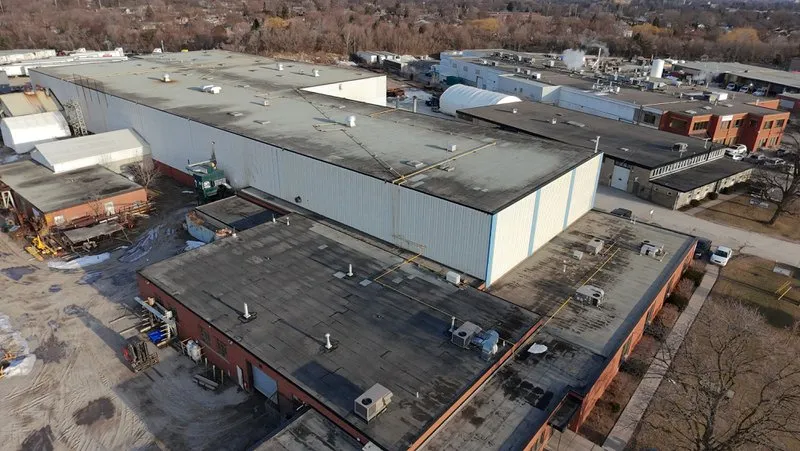
None of these announce themselves. Seams open slowly. Flashings weather. A seal around a rooftop unit gives up years after it was installed. The roof keeps looking serviceable while its performance drops.
What a real inspection covers
An inspection that only answers "is it leaking?" is not worth booking. A useful one reports on membrane condition, seams, flashings, penetrations, drainage paths, surface breakdown and any sign of trapped moisture — and it pays particular attention to the area around rooftop equipment, where the detailing is most complex and the failures cluster.
The output should be a picture of the roof you can act on: what needs attention now, what can wait, and what to budget for.
The change most worth inspecting after
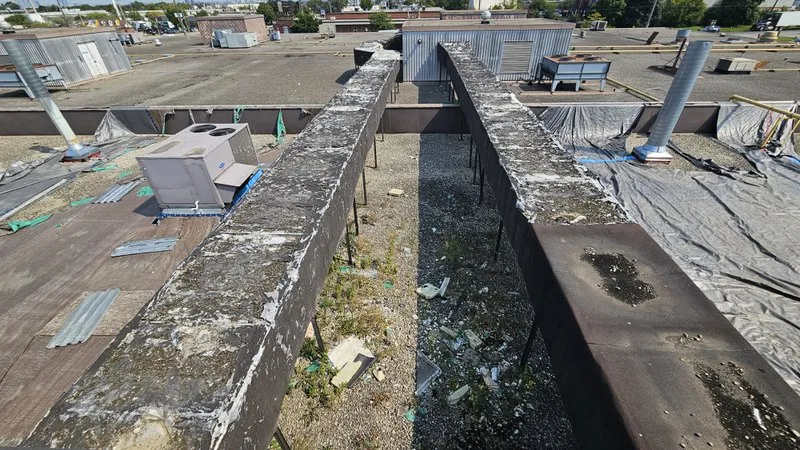
Any rooftop work. New HVAC units, a mechanical upgrade, plumbing that adds a penetration — every one of those cuts a new hole in a working roof. The installation may be perfectly sound, but the roof detailing around it is new, and it is now the youngest and least proven part of the system.
If equipment went on the roof this year and nobody has looked at the detailing since, that is where to start.
From reactive to planned
Without an inspection record, roofing work happens after a leak, a complaint or a call from a tenant. That means rushed decisions, emergency pricing and no control over timing.
With one, the same work becomes a line in next year’s budget. Not every finding leads to the same answer either — some roofs need a targeted repair, some are candidates for a restoration coating, and some are far enough through their life that replacement is the honest recommendation. The point of inspecting is to know which one you are dealing with.
If you have not had a condition report in the last two years, that is the place to start.
Get expert help
Have a question about your roof?
Book a free on-site assessment and we'll give you a straight answer grounded in your actual building.
Get started
Request a quote or roof assessment
Tell us about your building and roof. We respond fast, usually the same business day, and can book an on-site assessment.
- No-obligation written proposal
- Property & facility managers welcome
- Emergencies? Call (416) 798-0977