
Insights · Delta Roofing
Why Flat Roof Leaks Spread Fast in Commercial Buildings
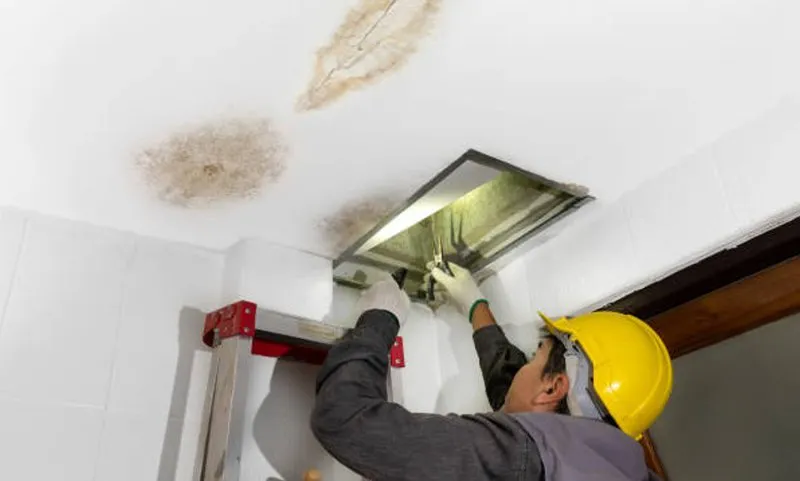
The stain is not the hole. On a commercial flat roof water enters in one place and appears somewhere else entirely — which is why a small ceiling mark is a poor guide to how much roof is wet.
Article
The stain is not the hole. It is the single most useful thing to understand about a commercial flat roof leak, and the reason a small mark on a ceiling tile is such a poor guide to how much of the roof is actually wet.
Why water moves sideways
Water that gets past the membrane does not drop straight through. It runs along the deck, spreads through the insulation and tracks around penetrations, following whatever path is available until it finds somewhere to come through.
The drip you can see may be several metres from the breach that caused it. That is why chasing a leak from directly below the stain so often fails, and why the repair that follows a guess so often does not hold.
Drainage decides how much time water gets
A flat roof is built to move water off quickly. When drains clog or low spots hold water, it sits instead — and sitting water gets time to work into seams, flashing details and penetrations that would have shed it without complaint.
Ponding is not just a sign of a drainage problem. It is what turns a sound detail into a failed one.
Leaks start at details, not in the middle
The open field of a flat roof is the part least likely to fail. Almost everything starts at a transition:
- Flashing lines
- Curb details
- Parapet wall transitions
- Pipe and conduit penetrations
- Rooftop units
- Drains and scuppers
These are the places where the system changes direction, changes material, or has been cut through — and they are where an inspection should spend most of its time.
Rooftop changes add new starting points
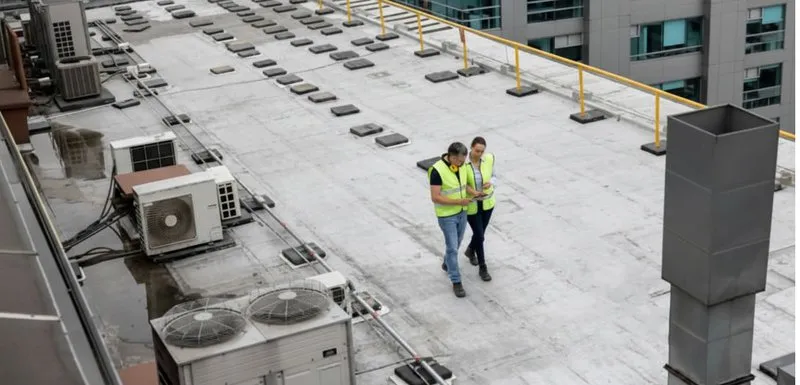
Commercial roofs change through their service life. Equipment is replaced, penetrations added, layouts reworked. A new kerb or support may cause no trouble at all for two years and then become the entry point, because it is the newest and least weathered detail on the roof.
Why the interior sign understates the problem
Once water is below the surface, wet insulation holds it. Thermal performance drops, the deck stays damp, and the affected area keeps growing outward from the breach — quietly, and without changing what you see from inside.
That is the trap in commercial flat roof leaks: the interior evidence stays small while the wet area does not.
Which means a repeat leak is a system question
One leak is an event. The same leak three times is information — usually that the repair keeps landing near the symptom rather than on the cause.
At that point the useful next step is not another patch but a look at the roof as a system: moisture mapping and a condition report that show how far the water has actually travelled.
Get expert help
Have a question about your roof?
Book a free on-site assessment and we'll give you a straight answer grounded in your actual building.
Get started
Request a quote or roof assessment
Tell us about your building and roof. We respond fast, usually the same business day, and can book an on-site assessment.
- No-obligation written proposal
- Property & facility managers welcome
- Emergencies? Call (416) 798-0977